How an IA Overhaul Drove a 63% Increase in Lead Inquiries
*To respect NDA restrictions this case study has been anonymized
Vector Span is a global infrastructure leader. Their site suffered from 3,000-page Information Architecture (IA) focused on internal silos rather than client acquisition and showing an integrated service offering.

Primary Users: Potential public and private sector clients needing support with large infrastructure projects.
Secondary Users: Potential new employees seeking roles such as engineering and HR.
A logical, client-centric IA restructure that merged fragmented service silos, resulting in:
Internally sensitivity: having to contend with potential negative reactions of moving business unit pages around.
Performance-Led UX: Leveraged GA4 analytics and tree testing to move the needle on key business metrics, including a 63% increase in lead inquiries
Define & Research
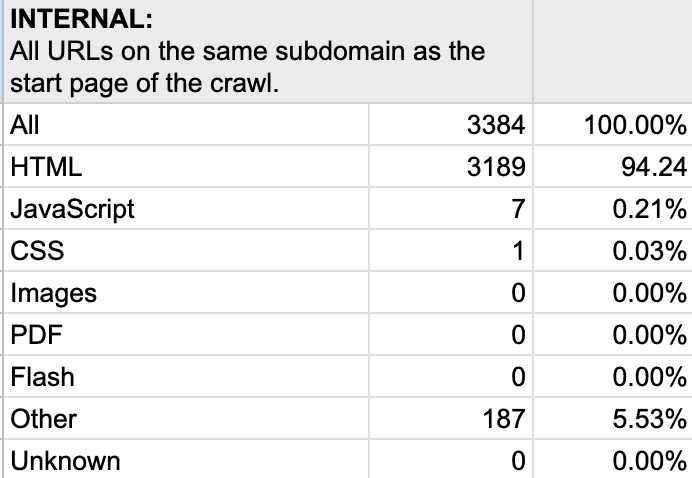
📍 Where were they starting from?
Define & Research
What were the top level themes?
Highlight: Customers shifting to digital experiences
Define & Research
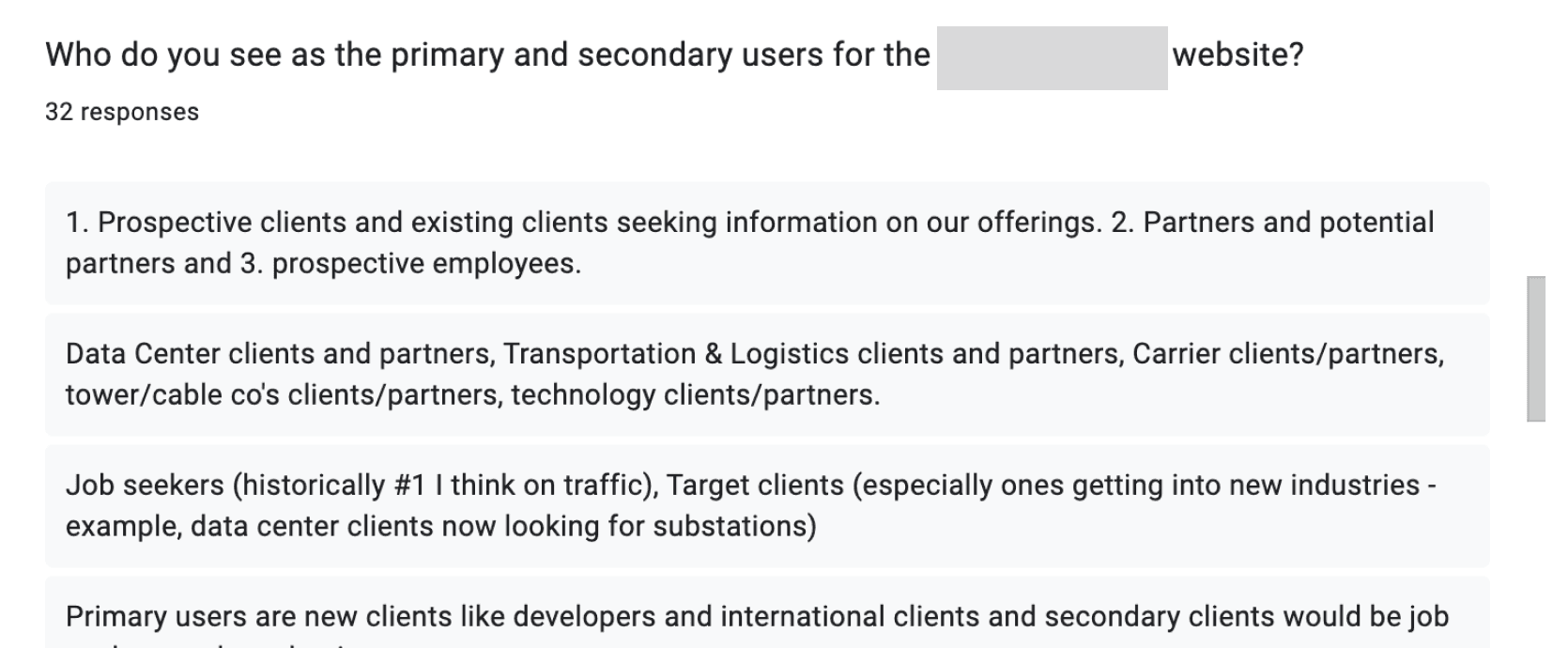
31 Survey Responses Later…
Discovering broad trends inside the organization in terms of pain points and business goals
Supplementing the moderated interviews
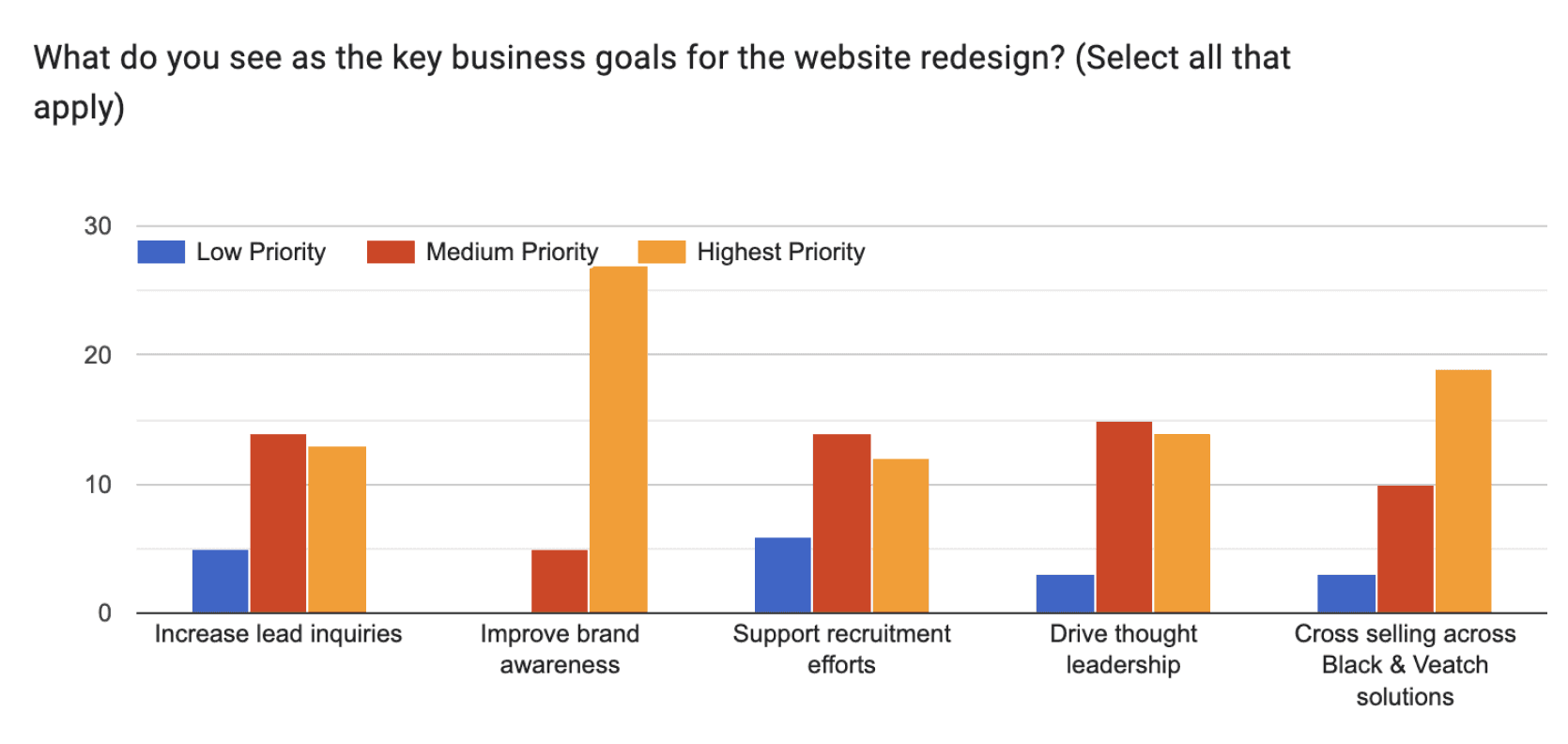
Brand awareness stood out as a clear winner for key business goals
Define & Research
8 Moderated Interviews
Remote interviews were conducted to generate detailed findings about business struggles and opportunities
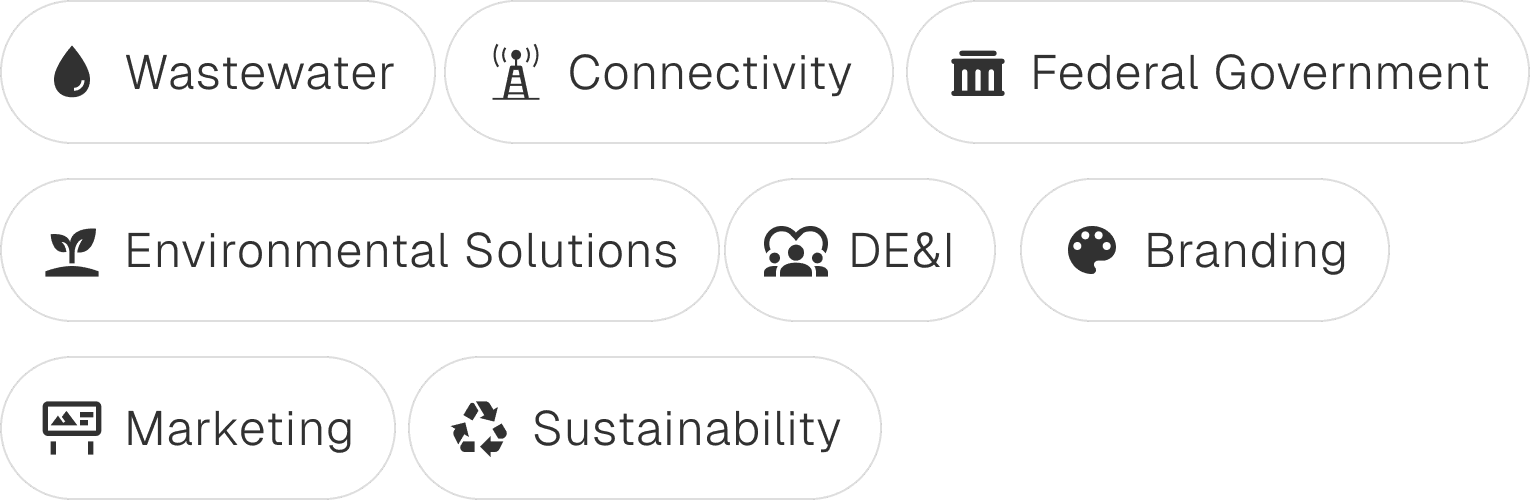
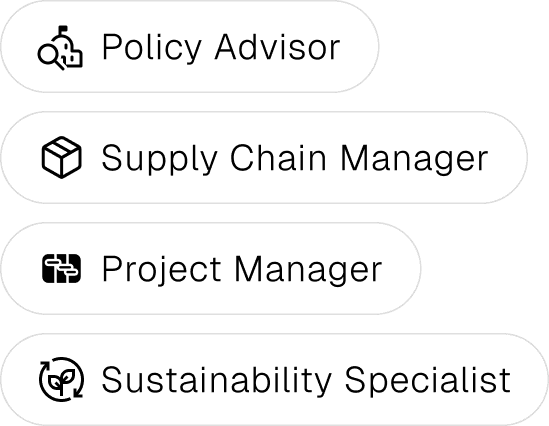
Who did I speak to?
How did this Vector Span project tangibly benefit a client? I recommended moving away from generic claims to impactful narratives.

Younger more digitally savvy clients are beginning to emerge with new browsing and purchasing habits - interests in data, sustainability, and innovation.

Design & Testing
🎯 What were my design goals?
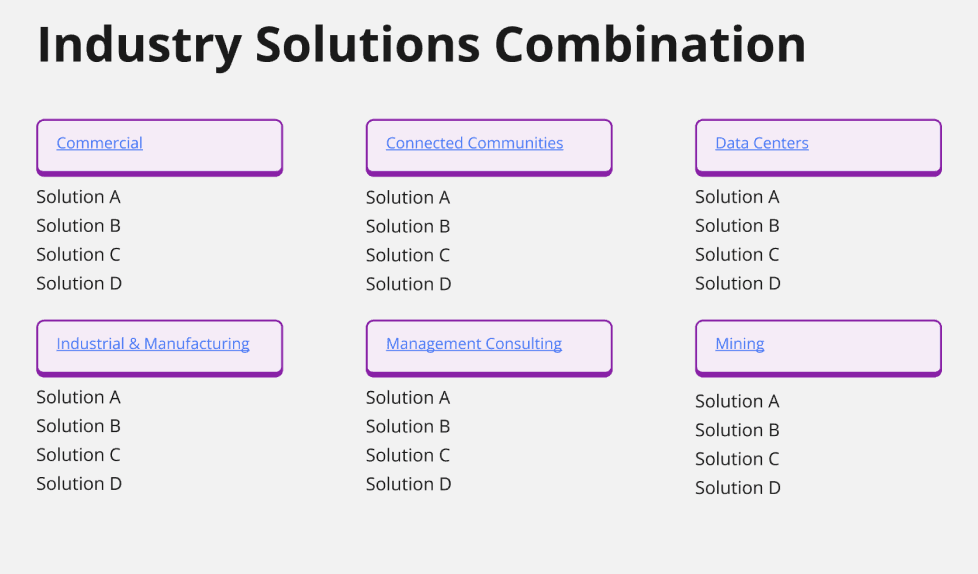
Consolidating fragmented service and solutions offerings
Highlighting sustainability and innovation content
Focus on prioritizing high-value content (e.g., project case studies).
The Initial Redesigned IA
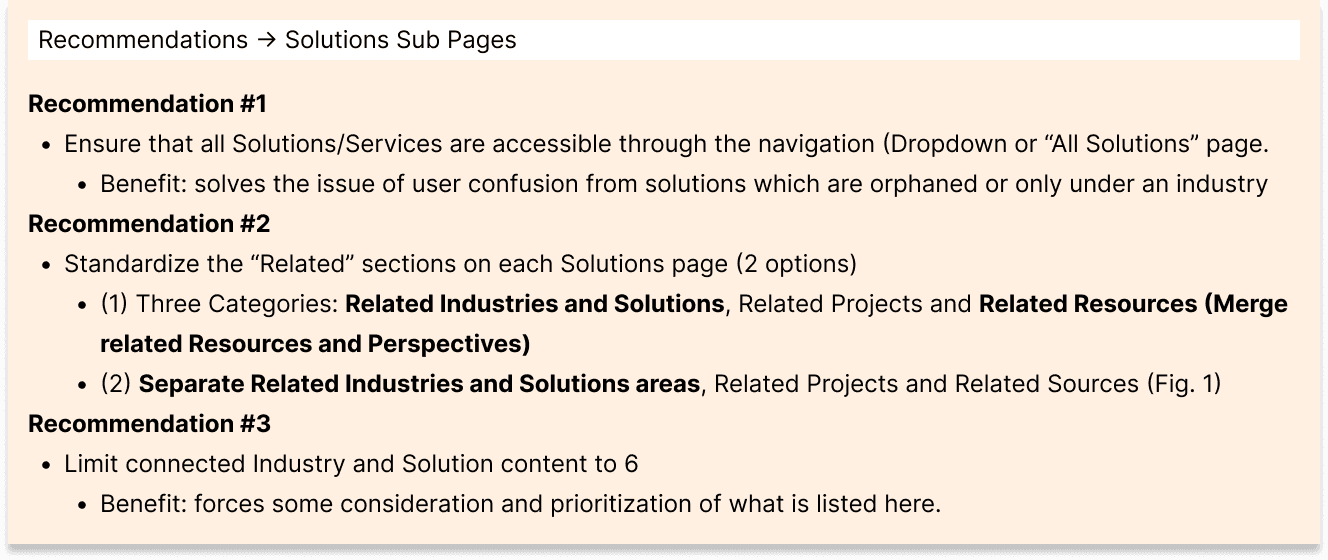
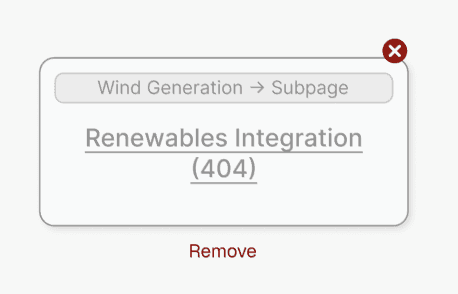
To prevent surprises, removed pages were tracked
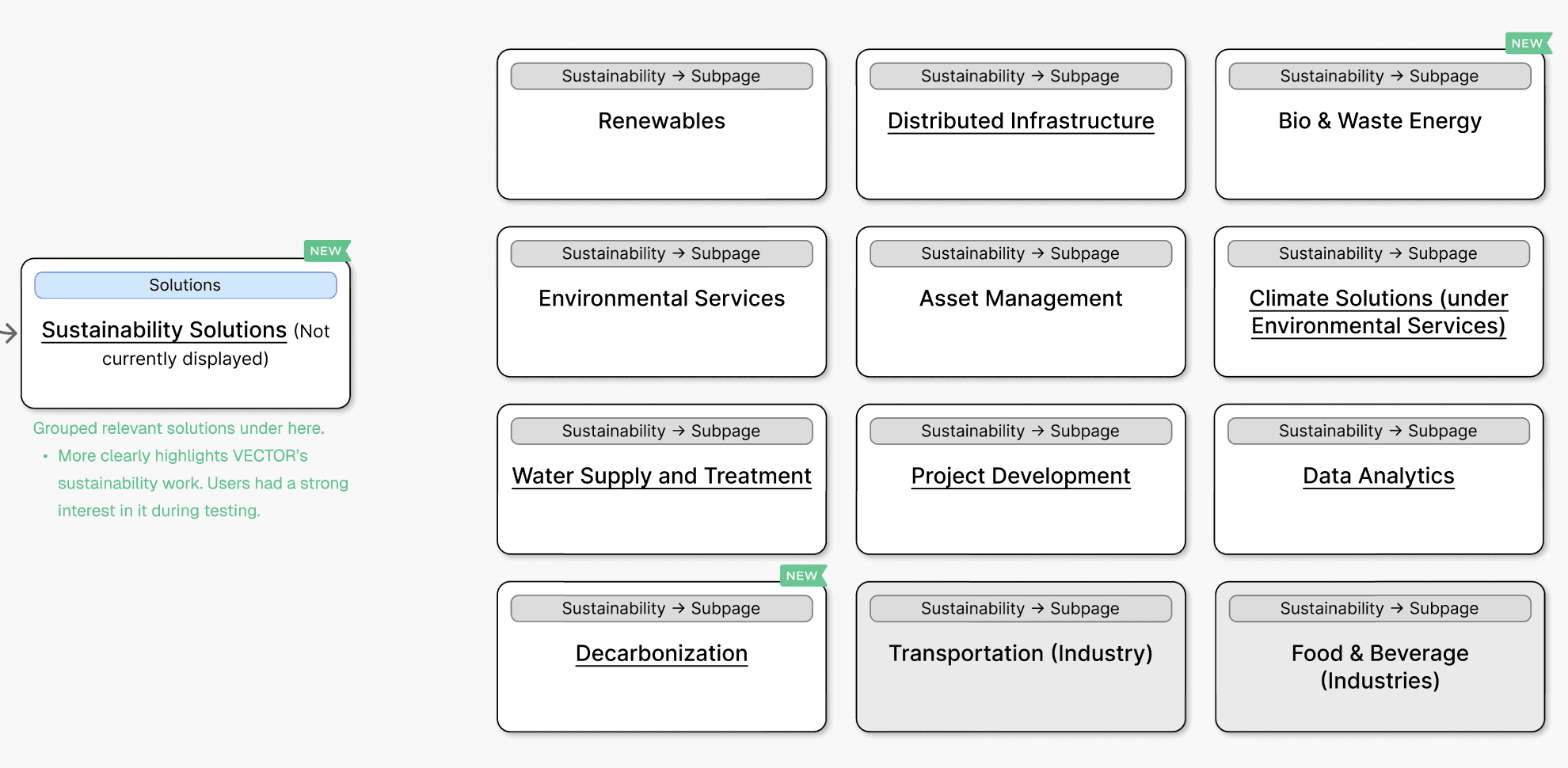
An example of how a redesigned section was presented to the client
Design & Testing
Testing Breakdown
Provides direct feedback on how users will navigate through the structure; resulting in targeted improvements
Keeping future conversations with the client centered on client/user needs
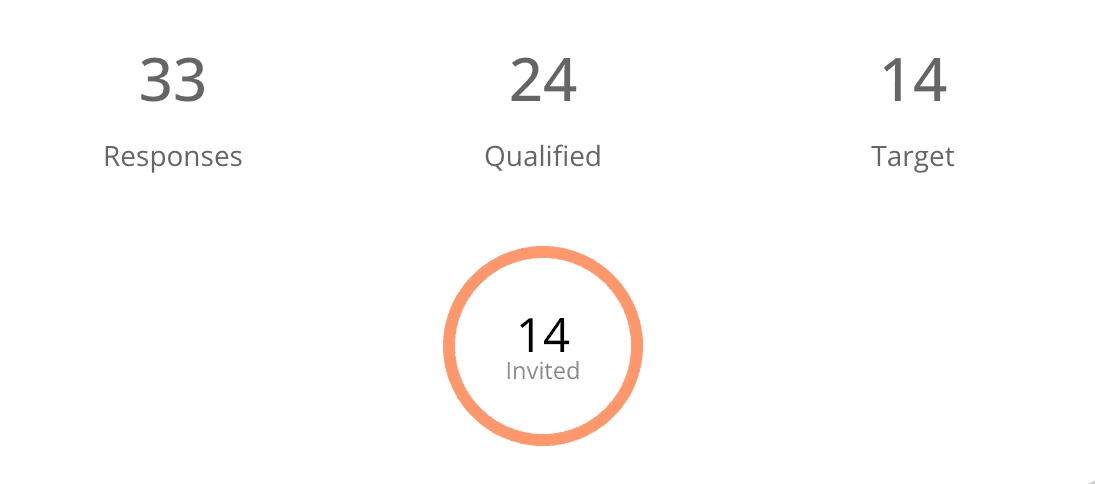
20 participants divided across job seeker and client personas were recruited through Respondent with a 75$ incentive.
Design & Testing
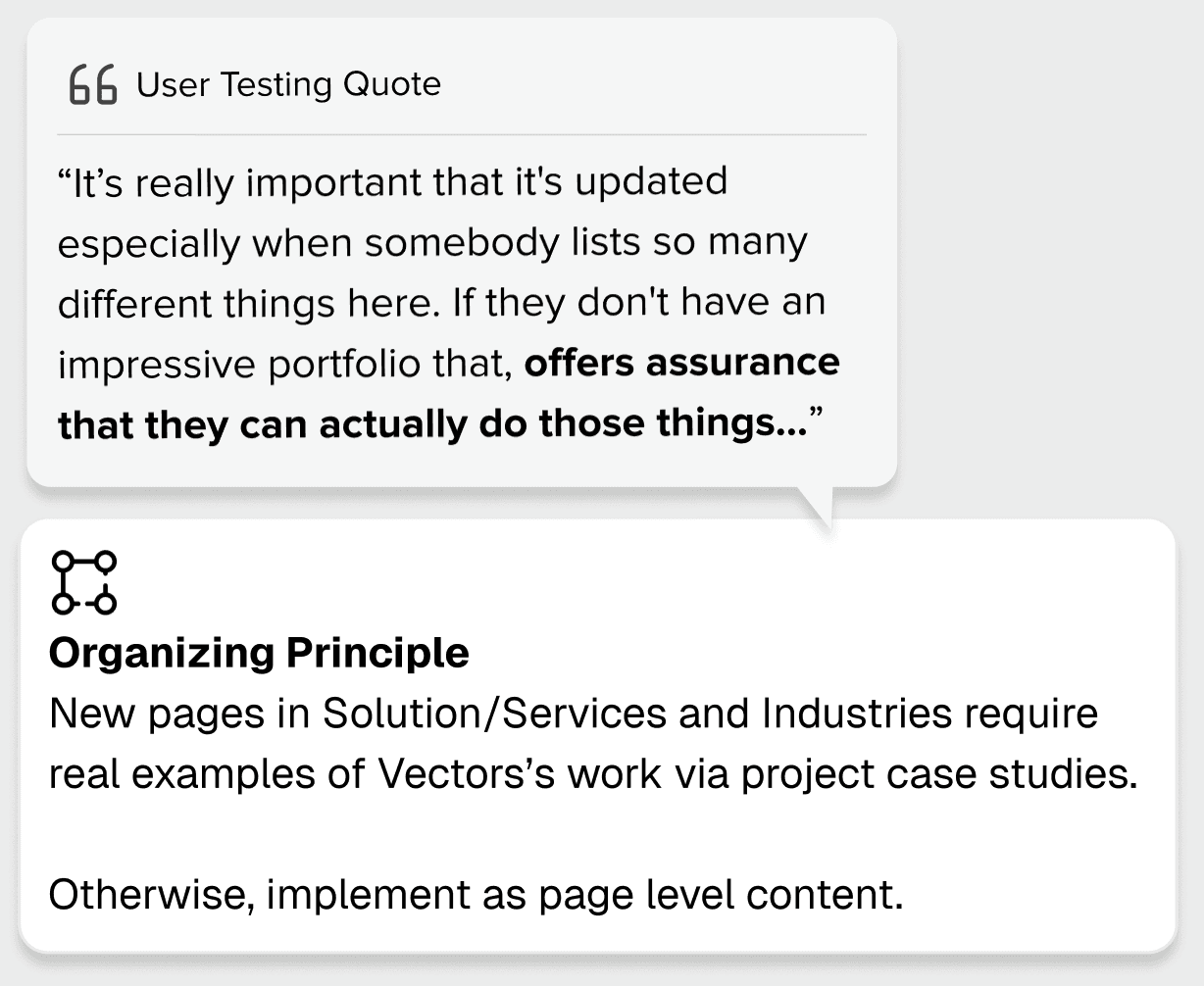
This could mean specific technologies, expertise, and locales
Individual project case studies or dispersed across the site in callouts
"When I look at projects, it just makes it more clear to me what the company exactly does."
Design & Testing
How would it be feasible for a company to perform at a high level in each category
"It looks like they're in basically every industry... I'm like, wow, they do it all, which makes me wonder... jack of all trades and master of none?"
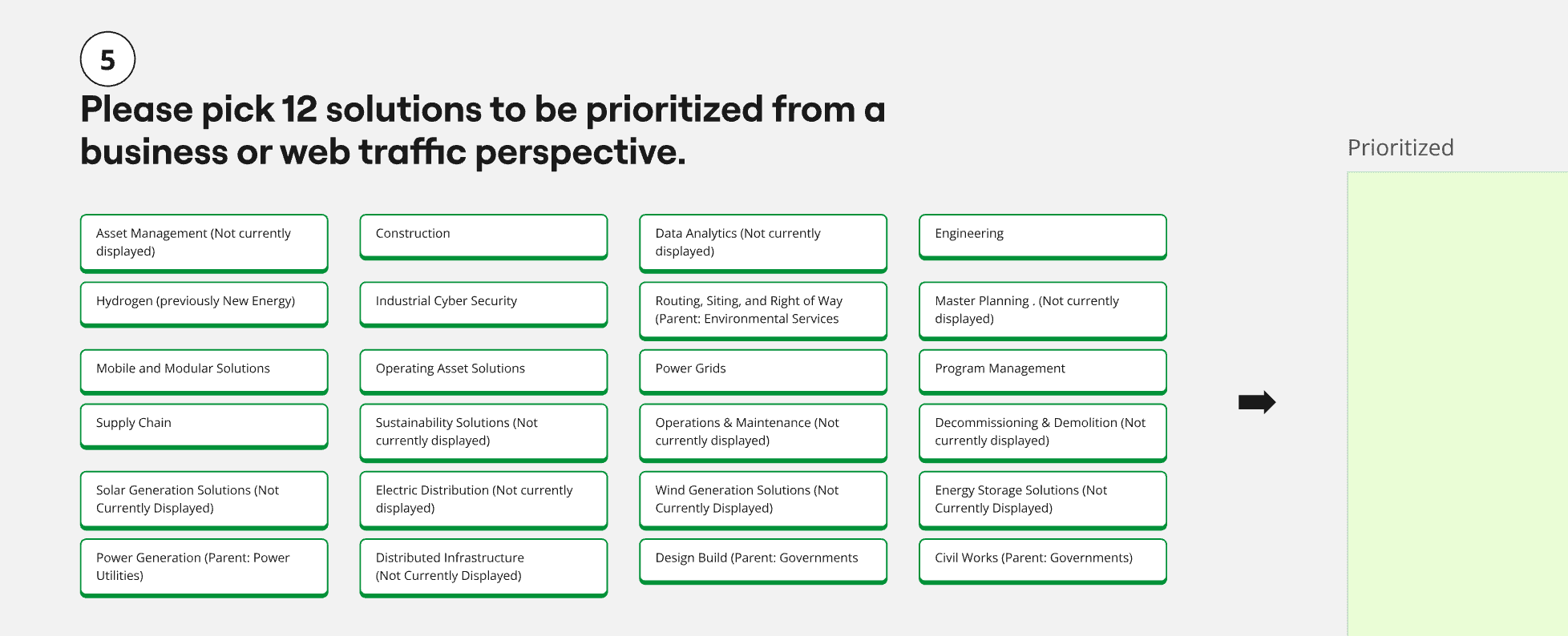
Miro board used for workshops
Reduction in "Industry" pages
Reduction in "Services" pages
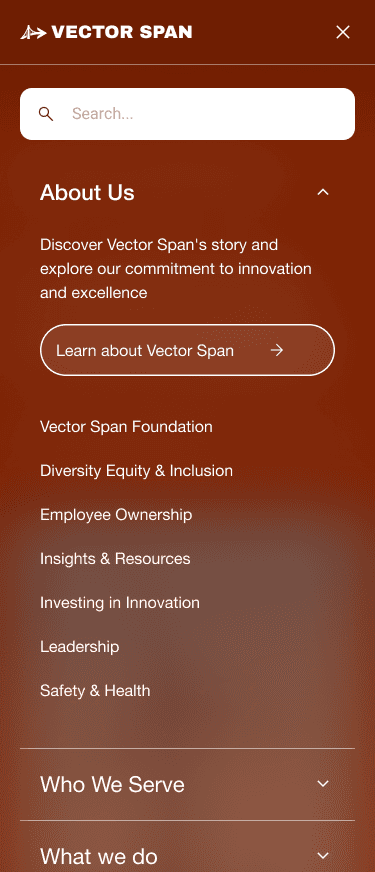
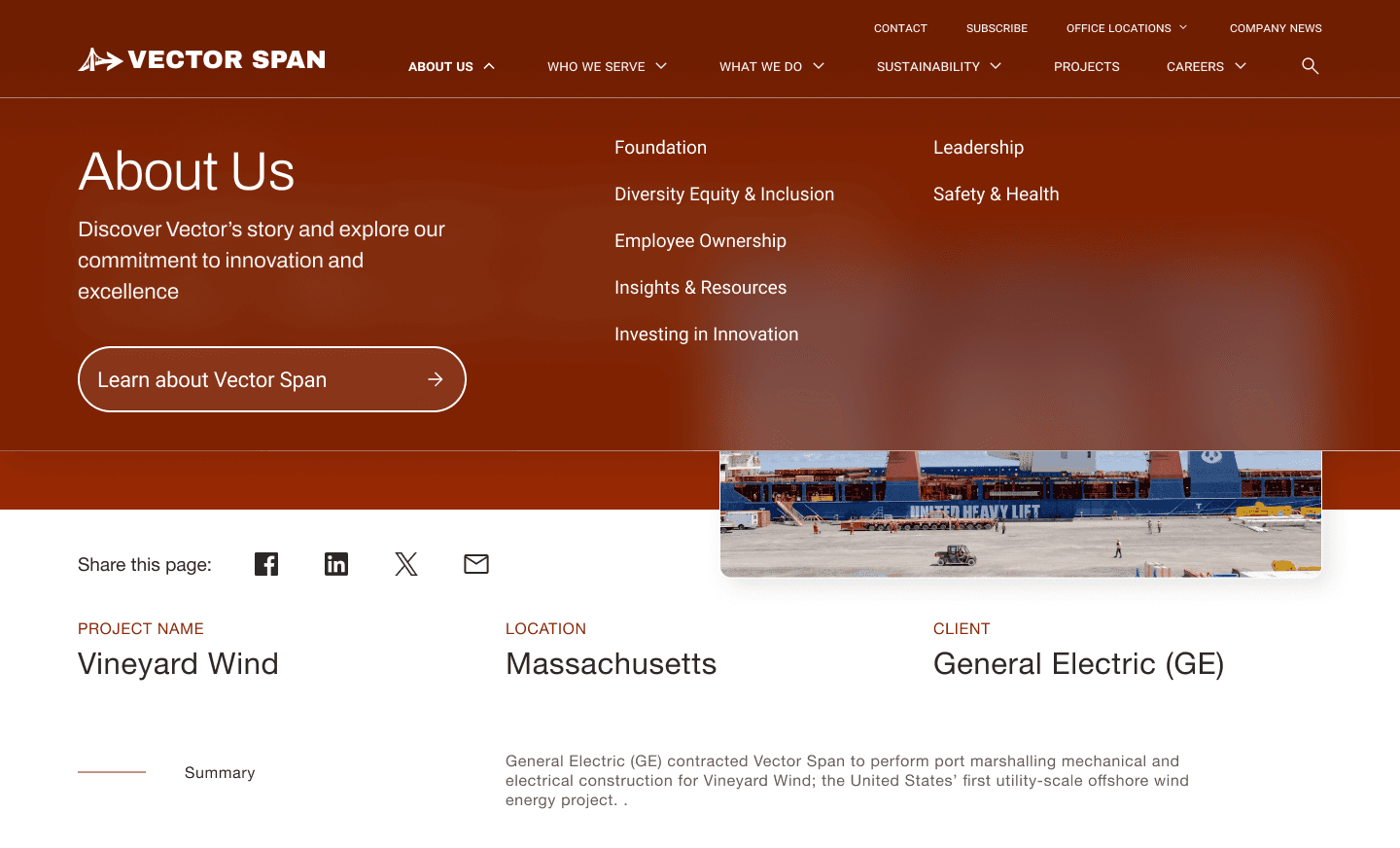
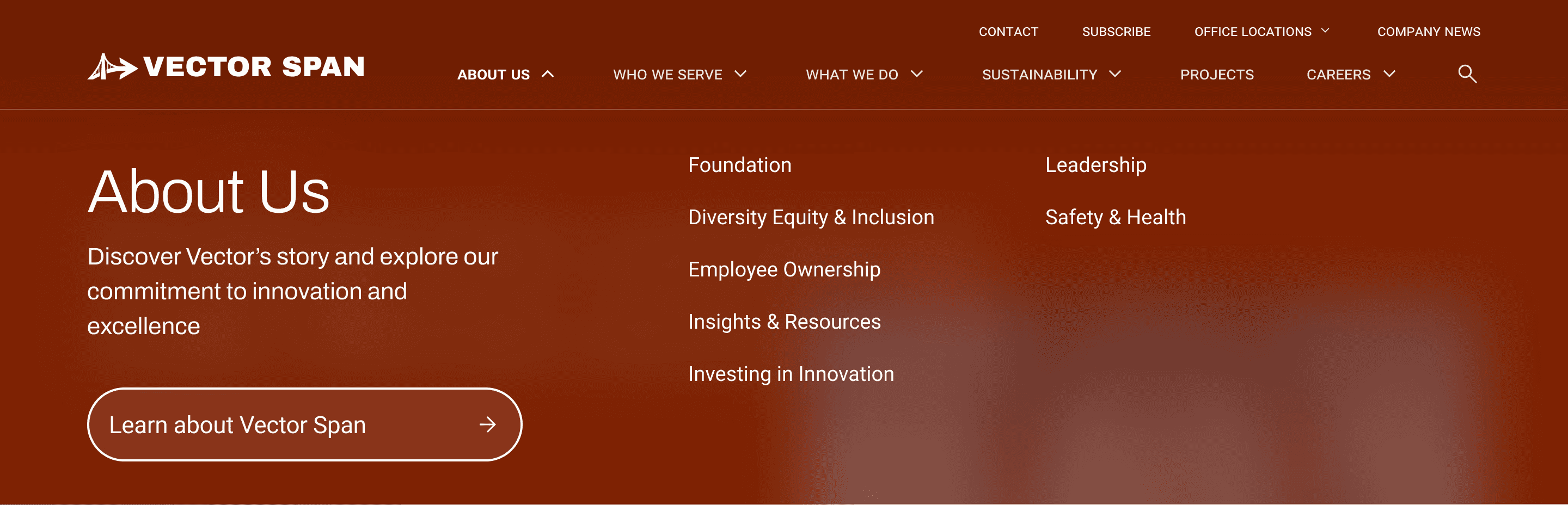
I took the initiative to provide my team with some nav designed based on the IA updates. Here are some highlighted improvements:
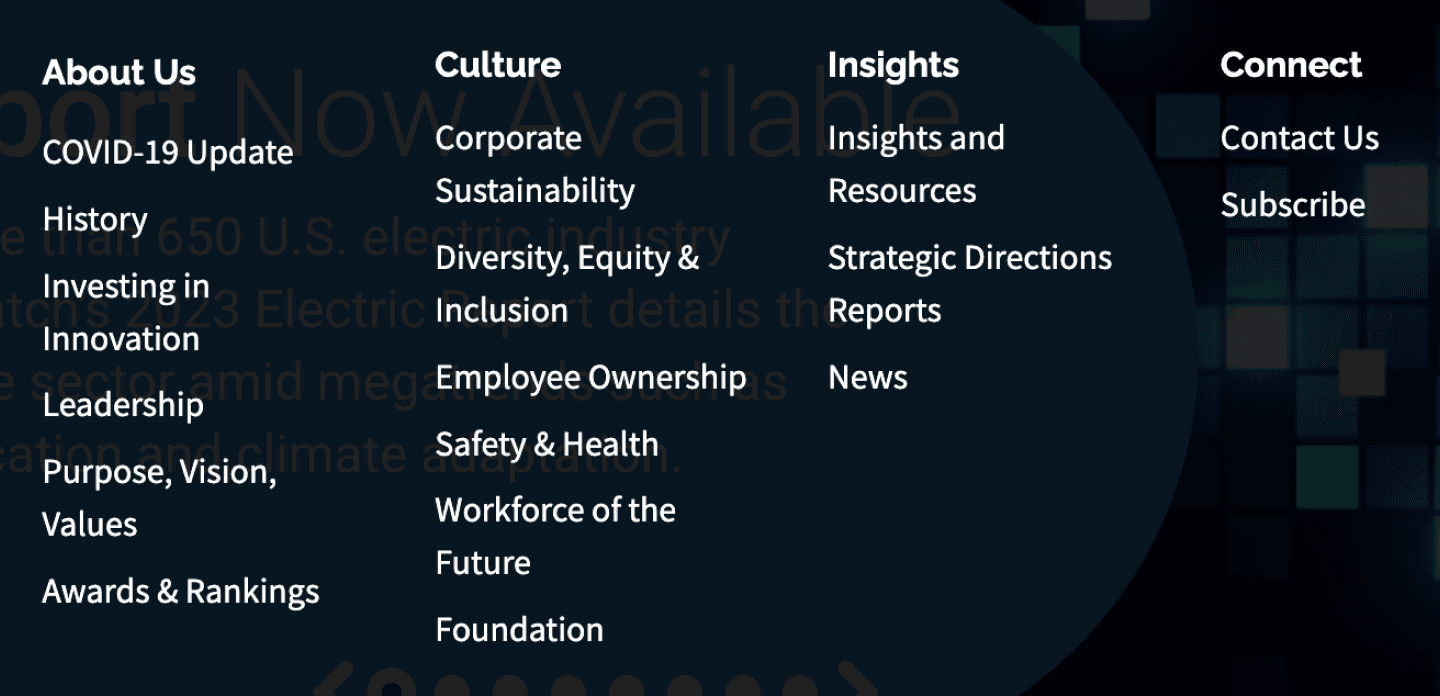
Where they started from
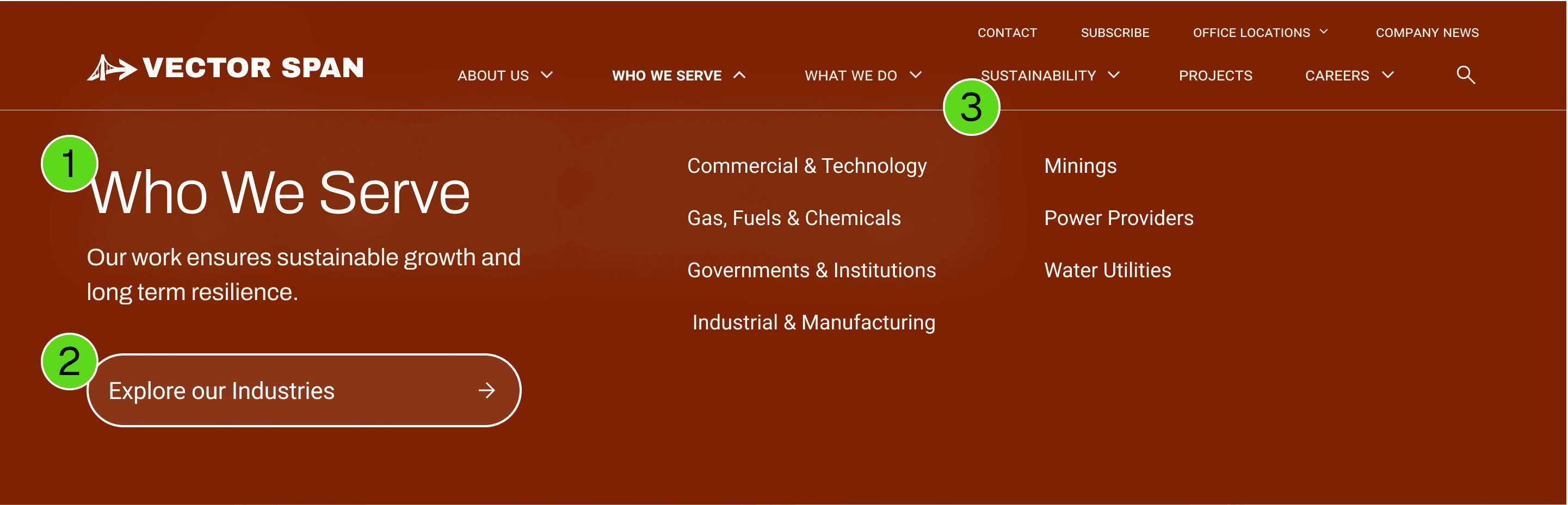
Retitled their sections to be more user oriented and less like their internal organization. (Ex. Industries -> "Who We Serve"
Created category pages:
allowed users to view all of Vector's offerings
aid reserving the list in the navigation bar as their highest priority industries
Sustainability was moved to the primary nav as per our research findings
✅ Successes
By the numbers
+53% in Unique Users
+84% in page views per session
+63% in contact form submission
*three months after launch
Leadership Buy In
Presented the final designs to the Chief Client Officer and 14 senior staff. Was crucial for securing organizational support for the upcoming changes.
Setting up for future growth
Vector struggled with a continual stream of new pages
Established organizational that guide when a page can be created.
🗺️ Opportunities
Global Expansion
The current IA focused on the North American market, creating the opportunity to explore localization for global regions like Asia and Europe.
Global Expansion
Extending the new IA and visual design to other fragmented web properties, such as subsidiary company sites and the corporate intranet.