How to merge complex financial plans together while avoiding errors.
The Essentials
Stakeholder management, UX Research, UX Design, UI Design, Usability Testing
~40 Marketing Planners across the EU and USA
Marketing teams at a global CPG company were managing millions in annual media spend; across 50+ brands, multiple markets, and dozens of channels.
What was the goal?
Enhance the user experience for users’ end-to-end workflows to encourage adoption against encroaching 3rd party tools.
The struggles and realities of integrating old legacy systems into one workflow and interface.
Marketing teams at a global CPG company were managing millions in annual media spend; across 50+ brands, multiple markets, and dozens of channels
→ Plans lived in dozens of spreadsheets.
→ Decisions were made on old data.
→ Errors had real financial consequences.
→ Massive efficiency gains on the table.
Marketing planners didn’t make decisions once, they experiment in a draft without touching the live plan.
What if instead of starting from scratch they could merge in specific changes from those experiments?

If anything went wrong:
Live plan adjustments got wrongly overwritten
Actualized historical data was at risk
Hours of strategic work got thrown away
Plans and their children (campaigns) became completely disconnected
Planners didn't need to review what stayed the same.
They needed to validate only what changed before committing real money.
Highlight: Support Complex Merges
A crucial decision point was whether to allow selecting budgets and KPIs independently.
Based on my existing knowledge of the platform and our users, I chose to design for this. We did not have time to conduct user preference research.
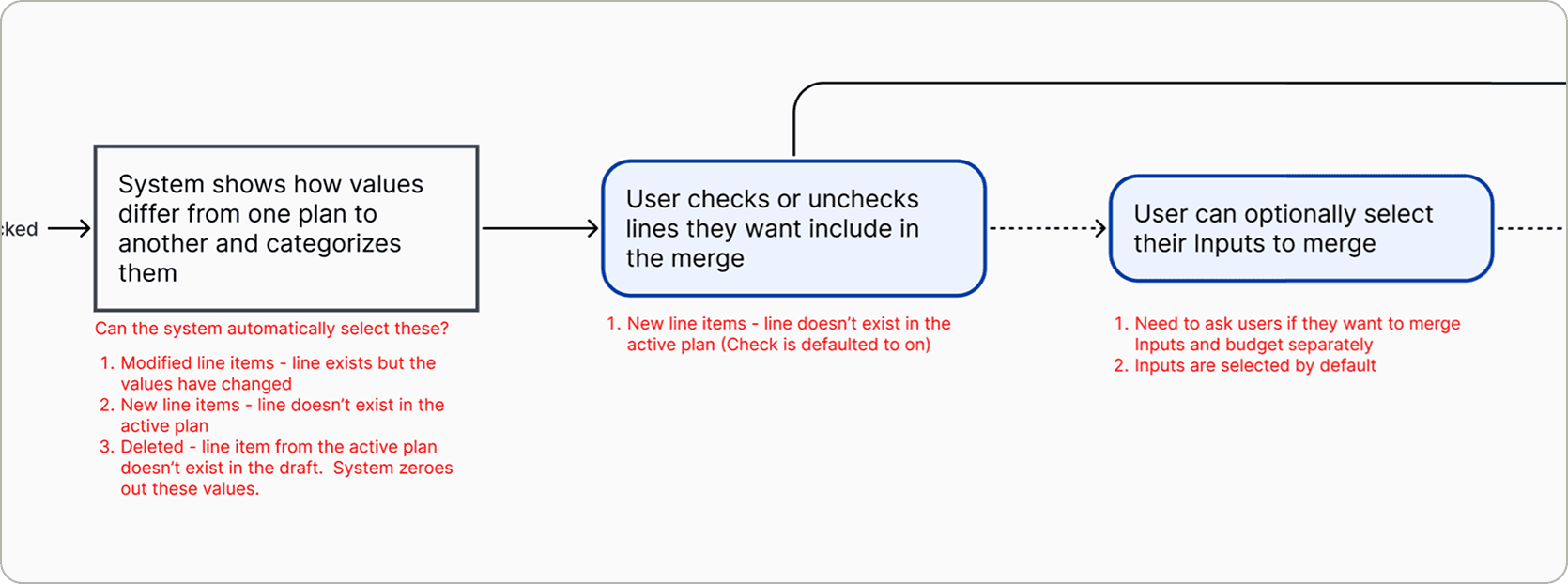
An early user flow breaking down the budget vs KPI functionality
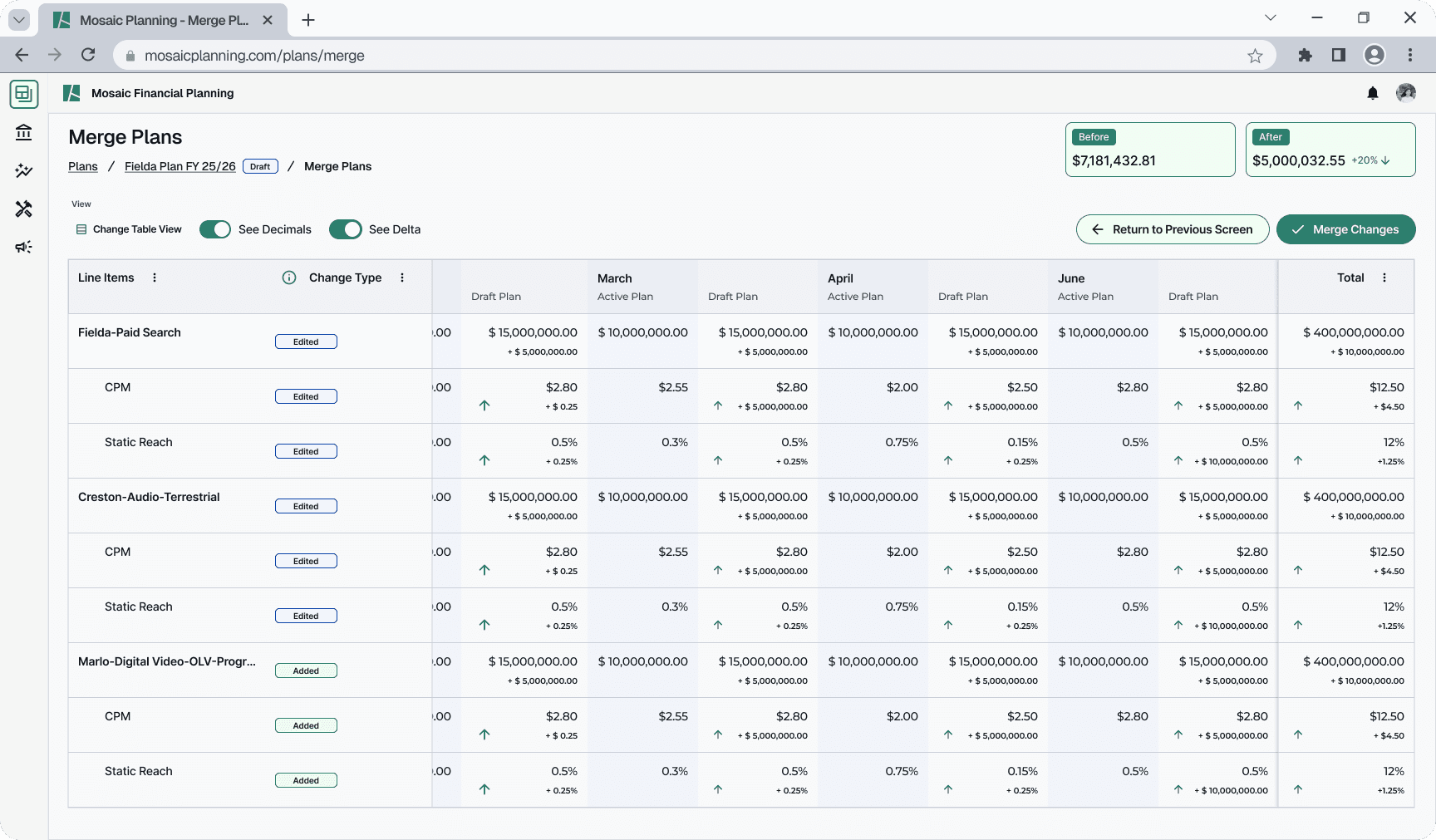
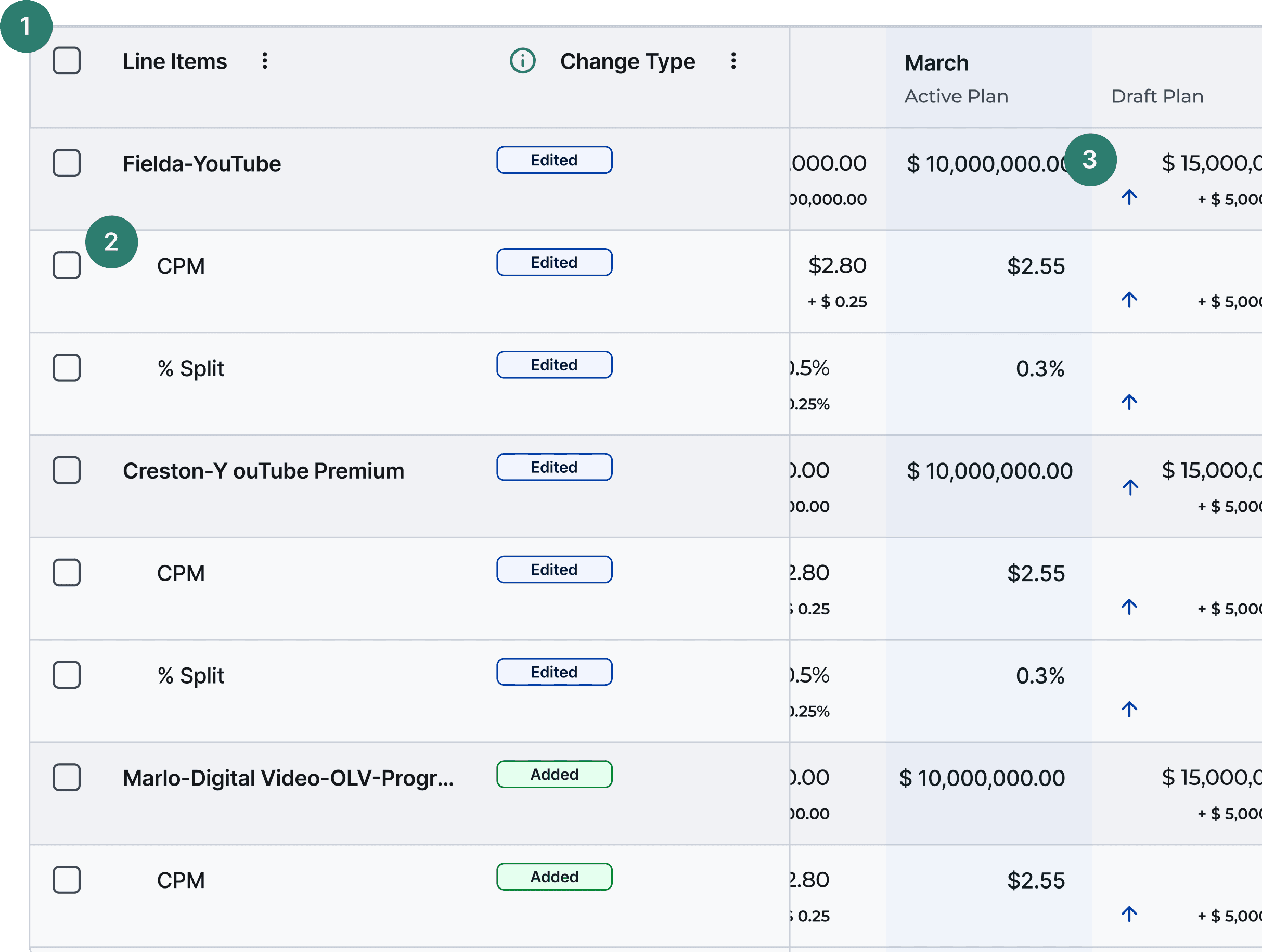
Data listed is only what differs between the two plans
KPIs are shown as sub rows under each main budget line.
Active/Draft columns show a clear difference between the two values
5/7 users wanted to merge budgets and KPIs separately, exactly what the initial design was built to support.

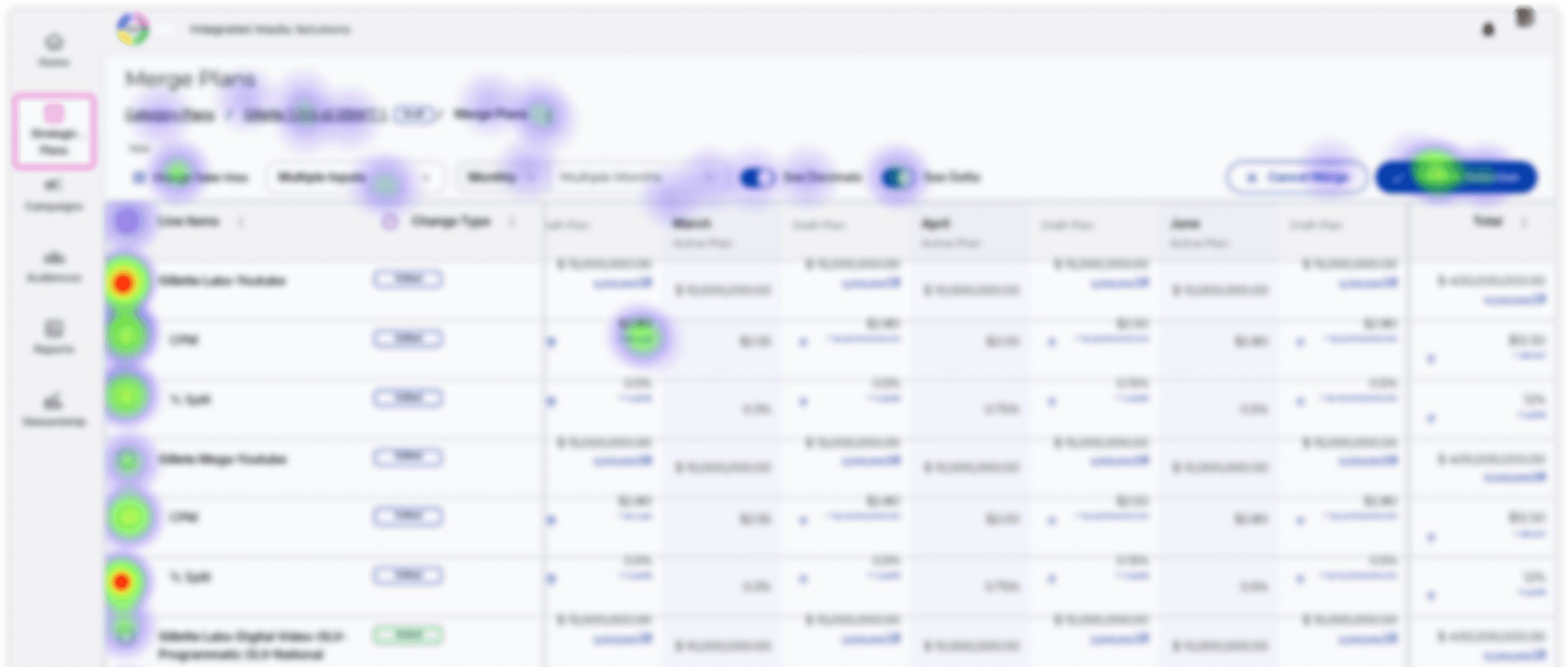
Bonus: we split the users and reversed the order of what design they saw first to prevent recency bias. we also avoided naming the flows 1 vs 2 or A vs B
Testing revealed anxiety about trust and control before committing an irreversible financial action.
Here’s how I addressed those concerns:
1
Calm users' nerves with double confirmation
The initial designs had one confirmation step but users were still concerned about the impact of their changes.
In response, I added an extra quick summary & confirmation step showing a before/after.
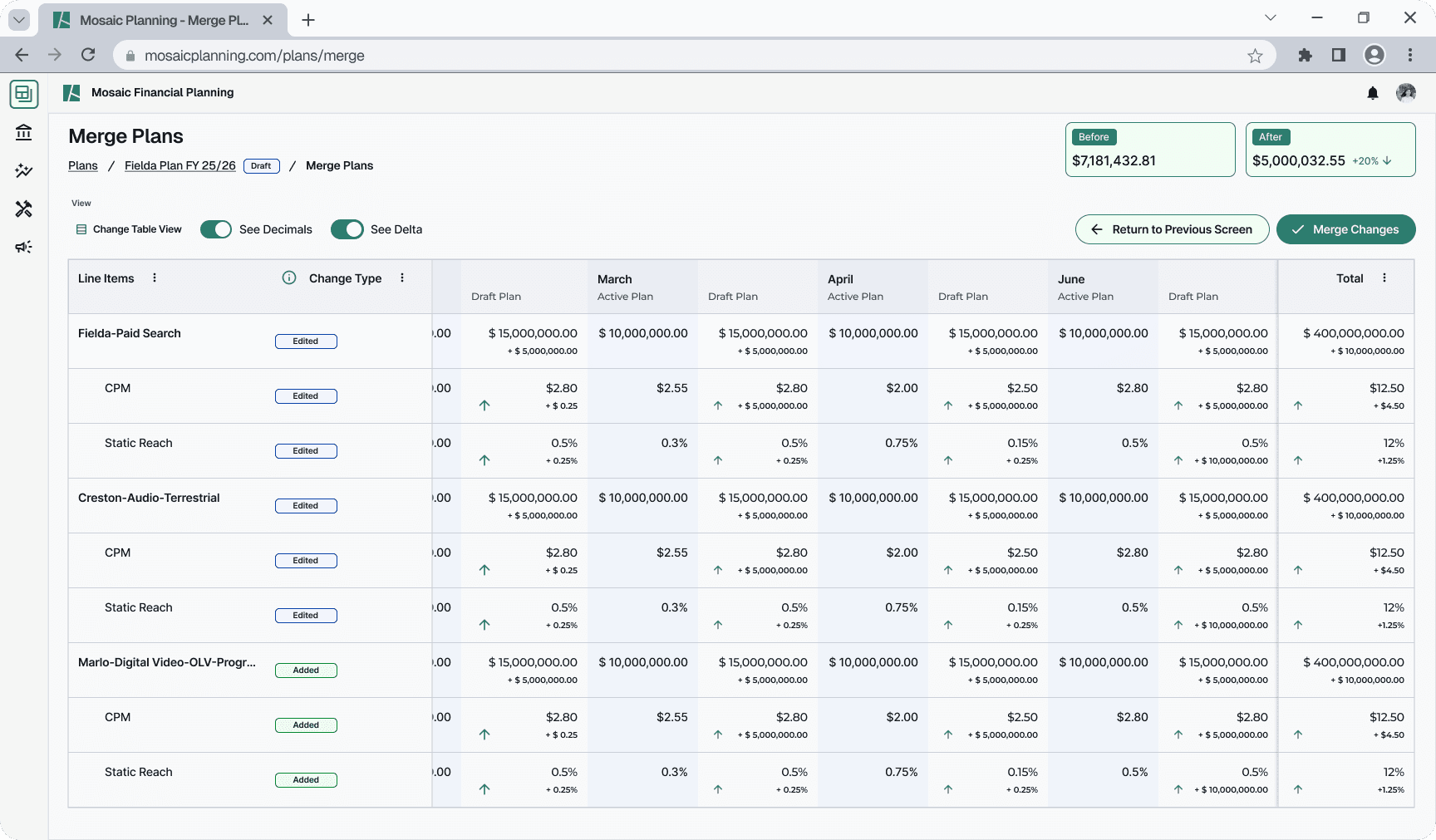
V1 of the confirmation screen.
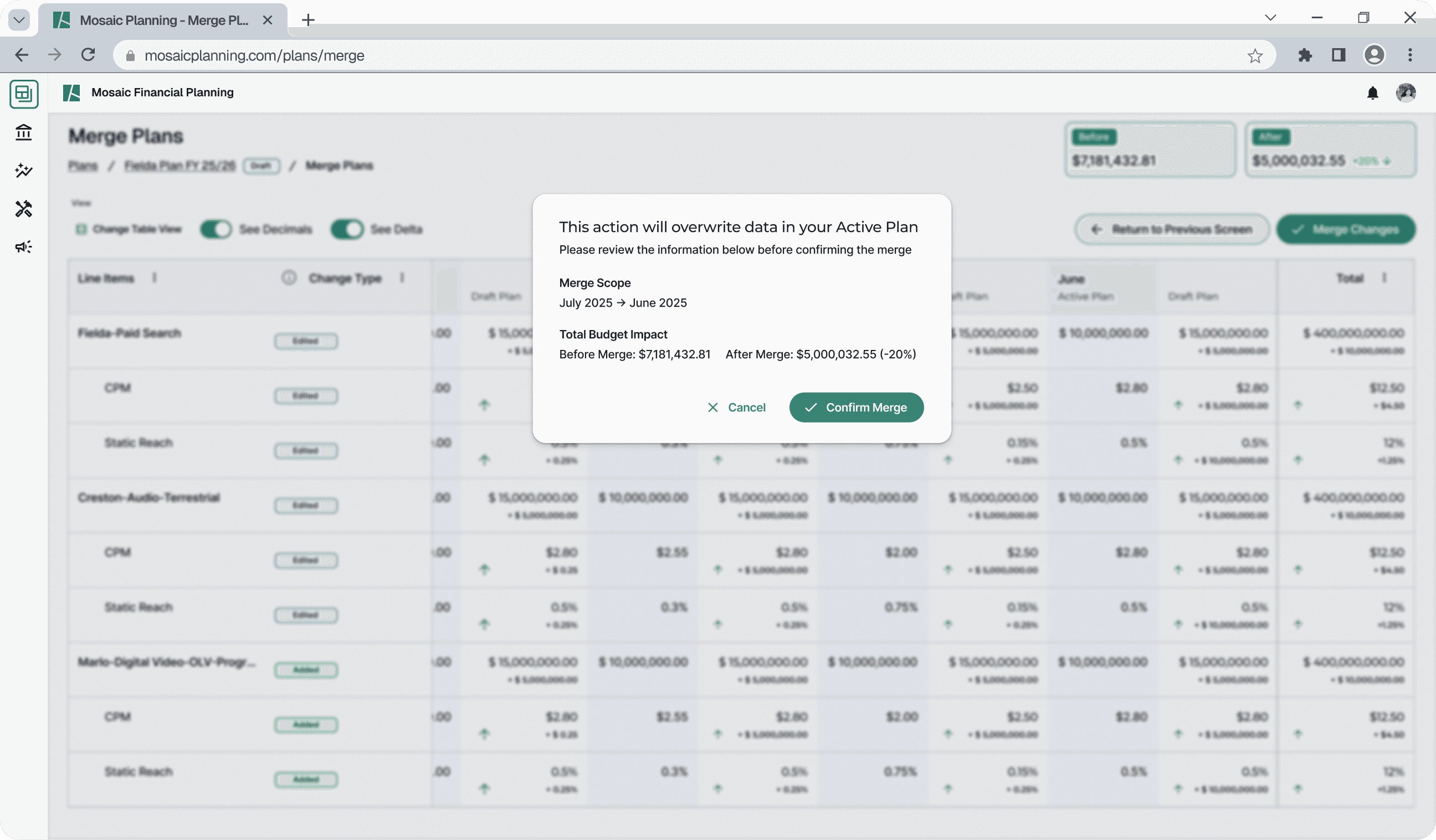
Additional confirmation
2
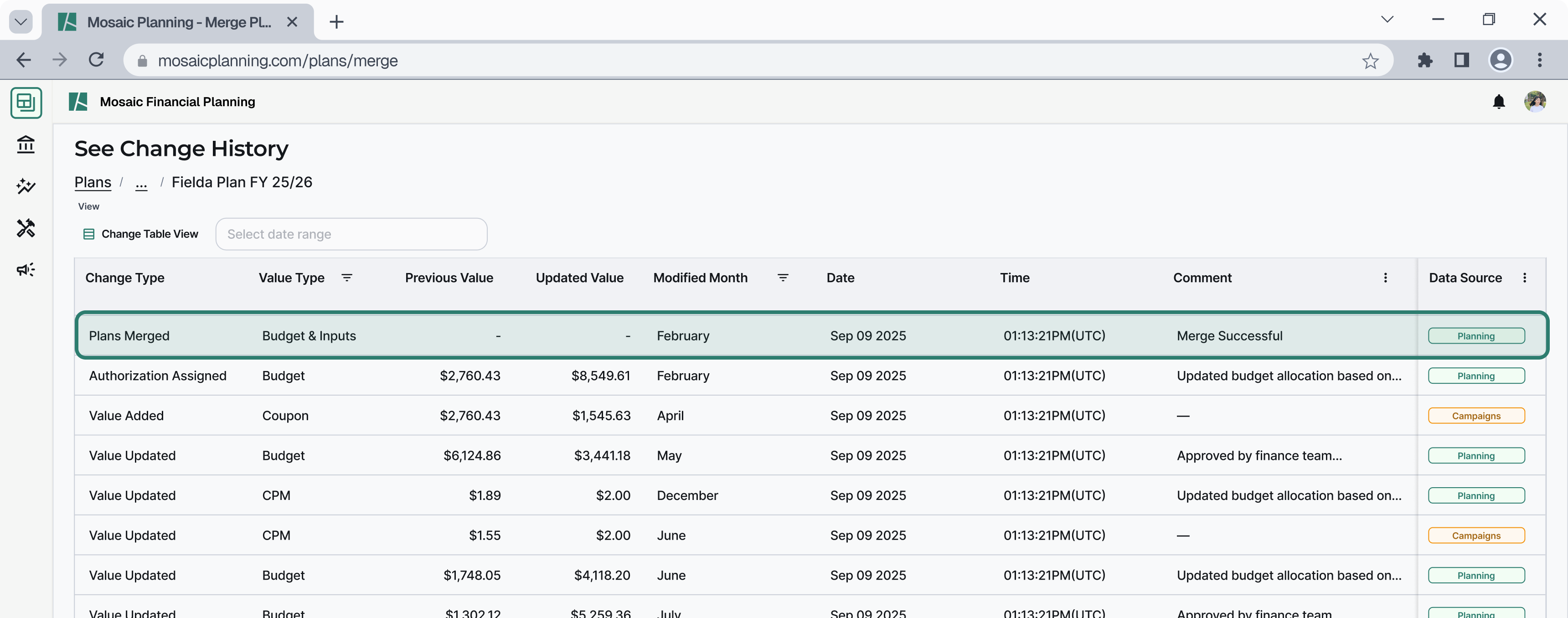
Leverage existing functionality with a change log.
Added a timestamp and user attribution to every merge. Multiple people touch these plans and users needed to know who changed what and when.
I proposed that we integrate these changes to the existing plan change log.
3
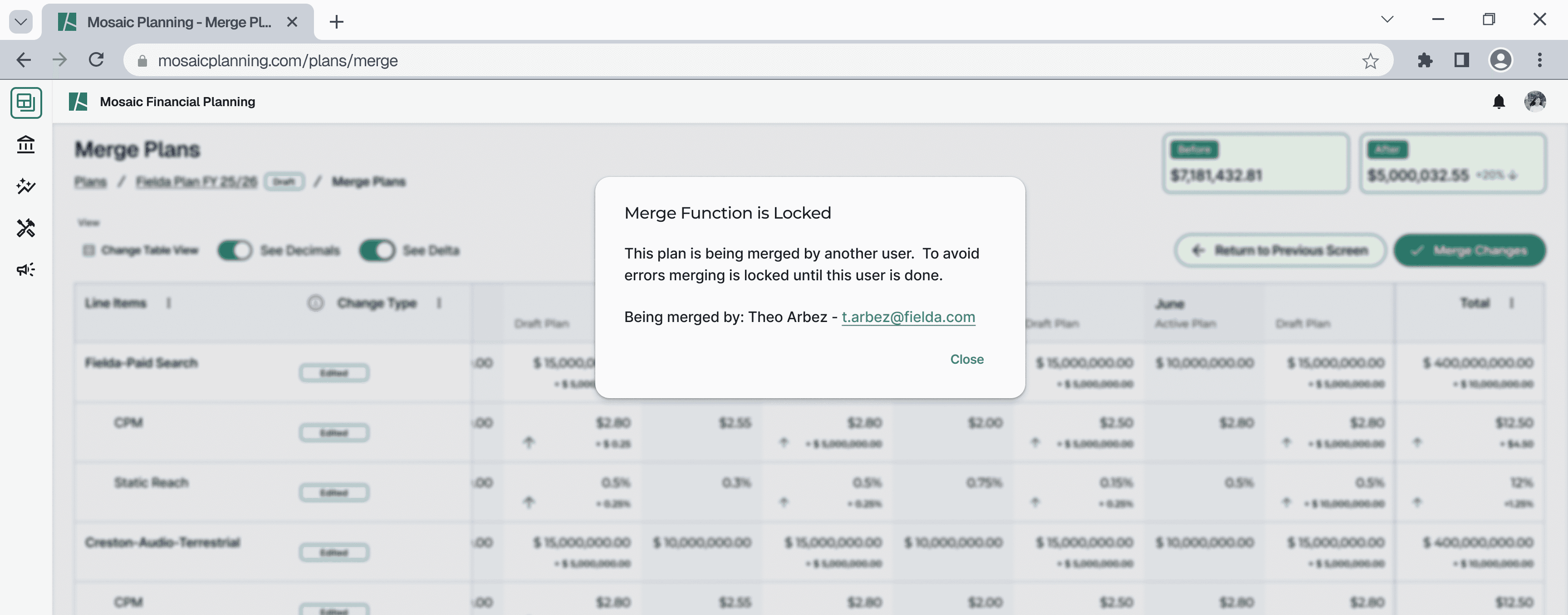
Get ahead of collaboration risks with Merge Locking.
Due to the scale of possible changes the merge function supports, the system locked that plan when someone is in the process of merging. This eliminated the risk of simultaneous merges corrupting the data.
This was not in the original requirements and was reviewed with our tech team for feasibility.
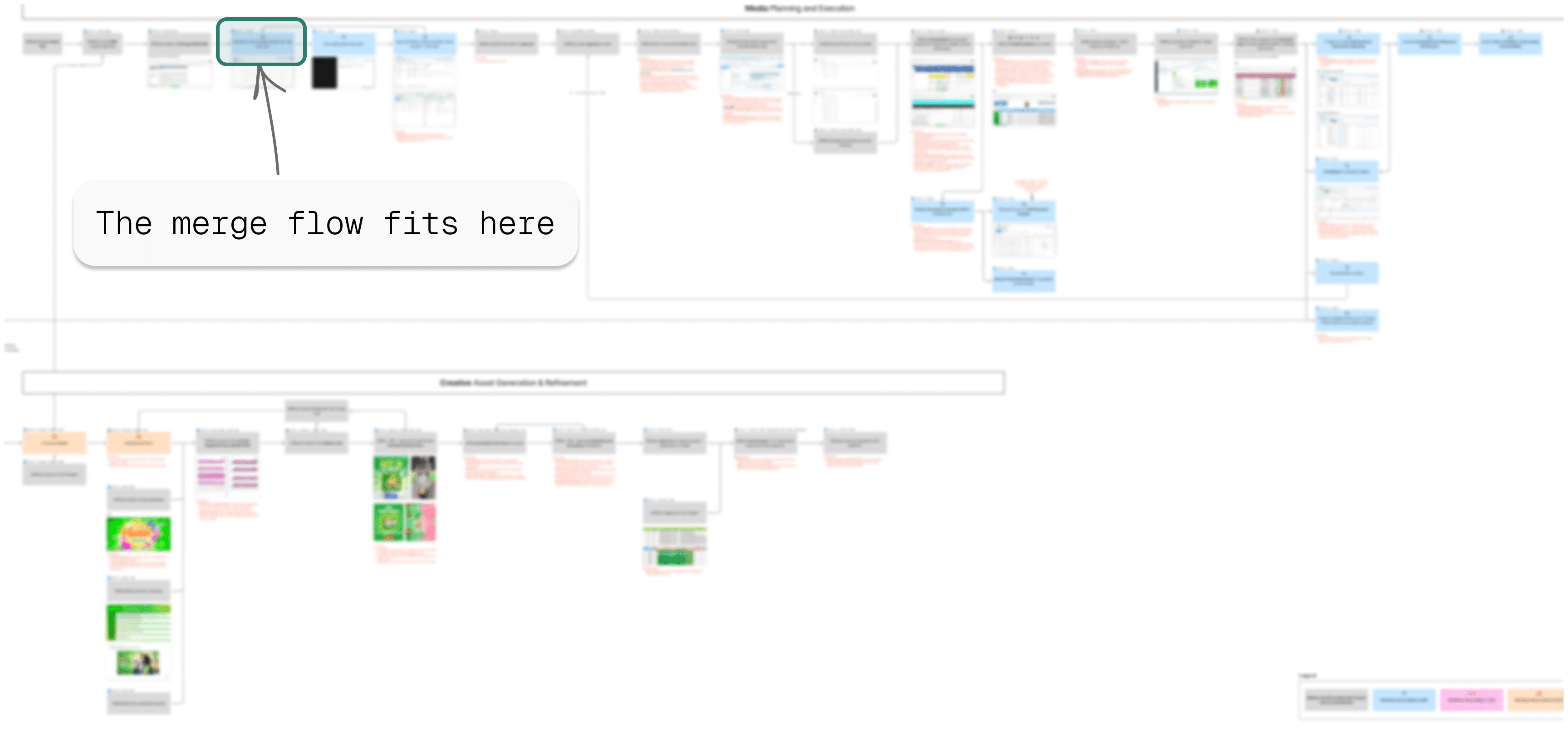
This feature sits inside a much larger integration effort I'm currently designing, expanding workflows to creative development and agentic AI:
Successes
The merge function was built and launched - allowing users of this platform to more easily build their financial plans.
I successfully navigated through the uncertainty of how much complexity to add or hold back from the UX.
Reflections
Trust your gut: By this point I had been working on this application for 1.5 years. Of course up-front user research would have been preferable. But in it's absence I had to trust in the expertise in both the product and it's users that I'd built up over time.
Expect the unexpected: User testing revealed things we didn't think to discover. Teams must be ready to adapt to these new findings.